







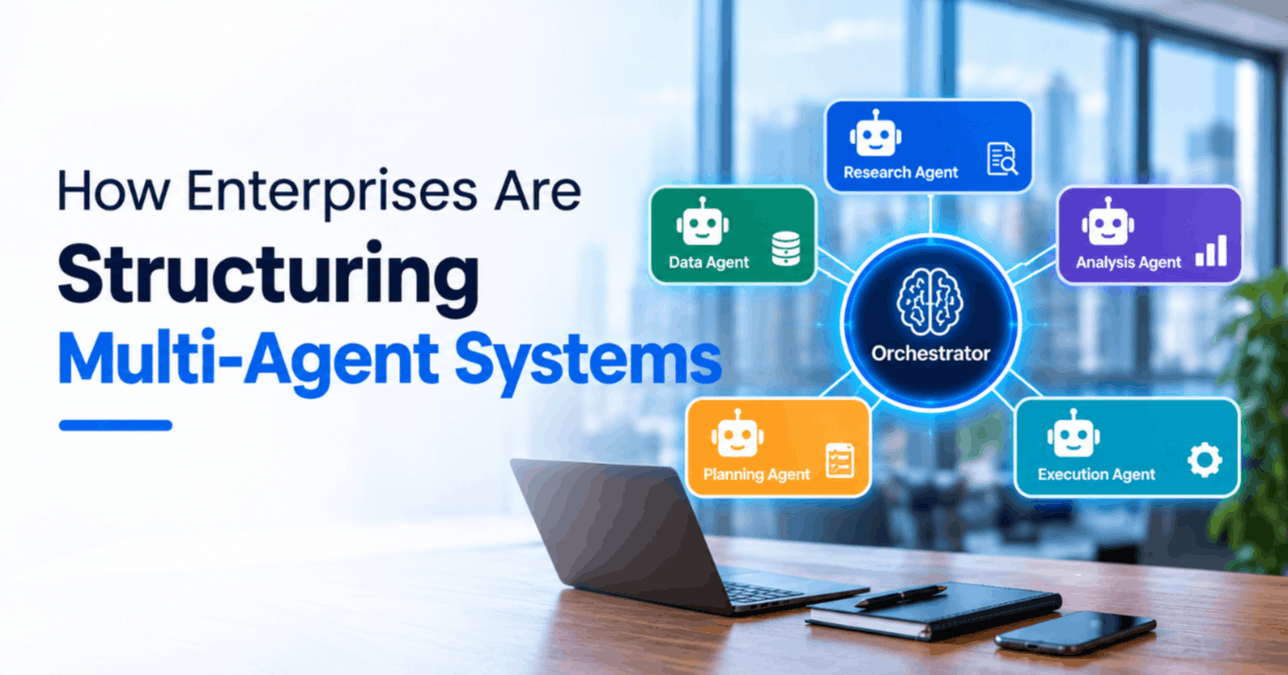
A multi-agent system divides a workflow among AI components with different responsibilities. That division can make a complex process easier to reason about, but it also adds coordination, latency, state management and more places for a request to fail. Use the pattern only when those trade-offs solve a real problem.
First compare simpler designs
A deterministic workflow, one model call with tools, or a single assistant with well-defined steps may be easier to test and operate. Consider multiple agents when responsibilities are meaningfully distinct, can be expressed through clear input/output contracts, and benefit from separate context or permissions. Do not split work just to make an architecture diagram look modular.
Define responsibilities and contracts
Give each agent a limited role, allowed tools and expected output format. An orchestrator should decide which task runs next, validate returned data and enforce a stopping condition. Pass only the context a role needs; shared conversation history is not a substitute for an explicit state model.
Control actions and resource use
- Use least-privilege tool permissions for each role.
- Set limits for steps, retries, time and service spend.
- Validate tool arguments and outputs against schemas.
- Require human approval for irreversible or high-impact actions.
- Make operations idempotent where retries could otherwise duplicate changes.
Design for partial failure
Agents can return incomplete, inconsistent or unsupported results. Define what the orchestrator does when a role times out, returns invalid data or reaches its limit. Preserve enough trace information to understand which step produced a result, while avoiding unnecessary storage of sensitive prompts and records.
Evaluate the whole workflow
Test end-to-end tasks, not only each agent in isolation. Include ambiguous requests, missing information, tool errors, repeated actions and attempts to exceed permissions. Track task completion and error categories against a simpler baseline. Keep a manual fallback and review whether coordination improves the outcome enough to justify its operational cost.
When to stop adding agents
If a role has no independently testable responsibility, if most failures occur at hand-offs, or if a simpler workflow meets the quality requirement, reduce the number of agents. A smaller architecture is often easier to secure, debug and maintain.
Related reading
See UfaqTech agentic AI development for the service overview, or contact the team.






Post Comments